


Real Touch: Meaning in Artificial Flowers
Real Touch artificial flowers are widely popular for their lifelike texture. When shopping for artificial flowers, you may come across terms like “Real Touch,” “Soft‑Touch,” “Natural‑Touch,” or “Touch‑Feel.”
But what do these terms actually mean?
Simply put, Real Touch material is designed to make artificial flowers feel more like real flowers when you touch them.
Traditional artificial flowers can sometimes feel smooth, stiff, or slightly plasticky. Real-touch flowers use specially developed materials and finishing techniques to create a more natural combination of:
- Soft petals
- Natural-looking textures
- Slightly flexible surfaces
- Realistic thickness
- Natural color variation
- A more delicate, fresh-flower-like feel
The result is an artificial flower that doesn’t just look realistic—it feels realistic, too.
What does a realistic flower need?
A realistic flower should appeal to more than just your eyes.
The best artificial flowers combine:
Look + Texture + Shape + Movement + Color
What materials are used for Real Touch artificial flowers on the market?
1.Latex & Synthetic Rubber
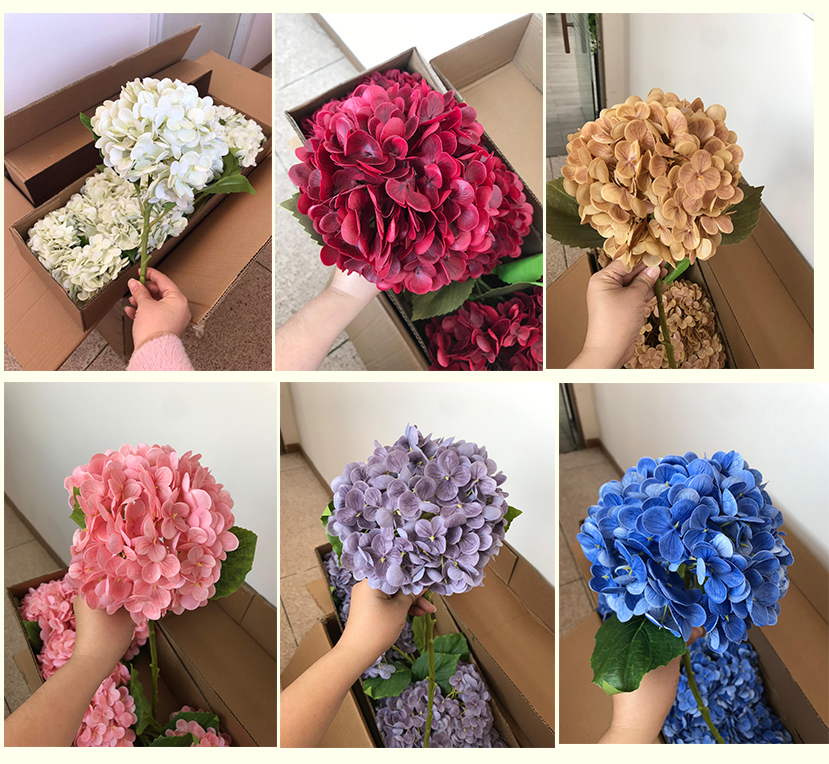
Latex has a soft, slightly cool-to-the-touch feel, combined with a plump and elastic texture that closely resembles the natural feel of fresh flower petals. This material is especially popular for flowers where softness, flexibility, and a lifelike touch are important. It is commonly used for hydrangeas, where the soft, full petals benefit greatly from a realistic tactile finish.
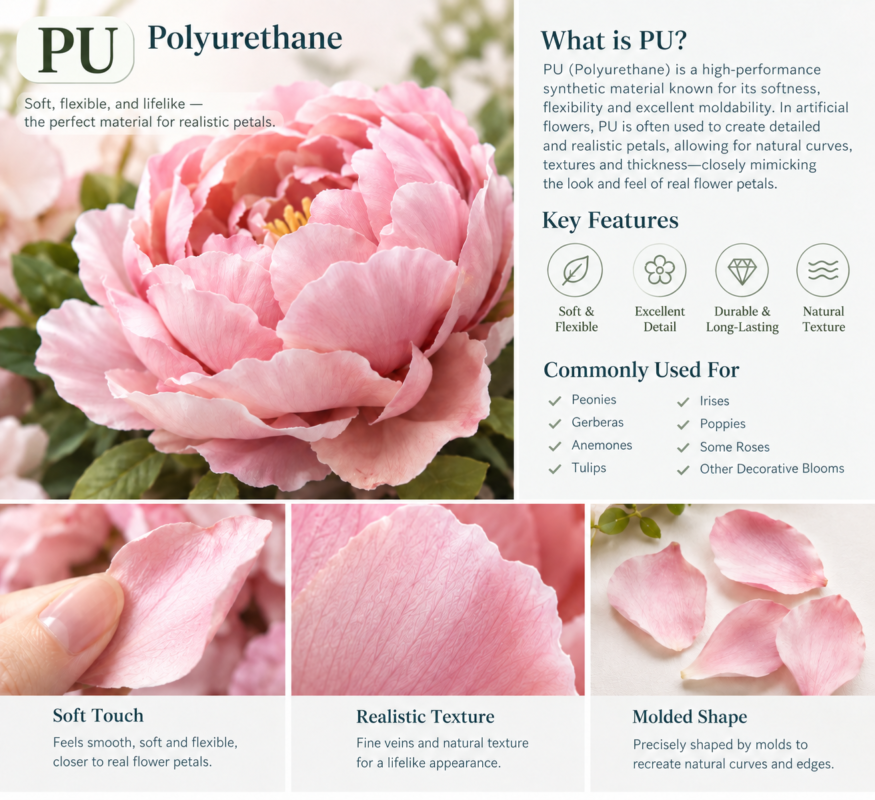
2.PU — Polyurethane
3.Silicone
Silicone can provide:
Fine detail + flexibility + a distinctive soft-touch surface
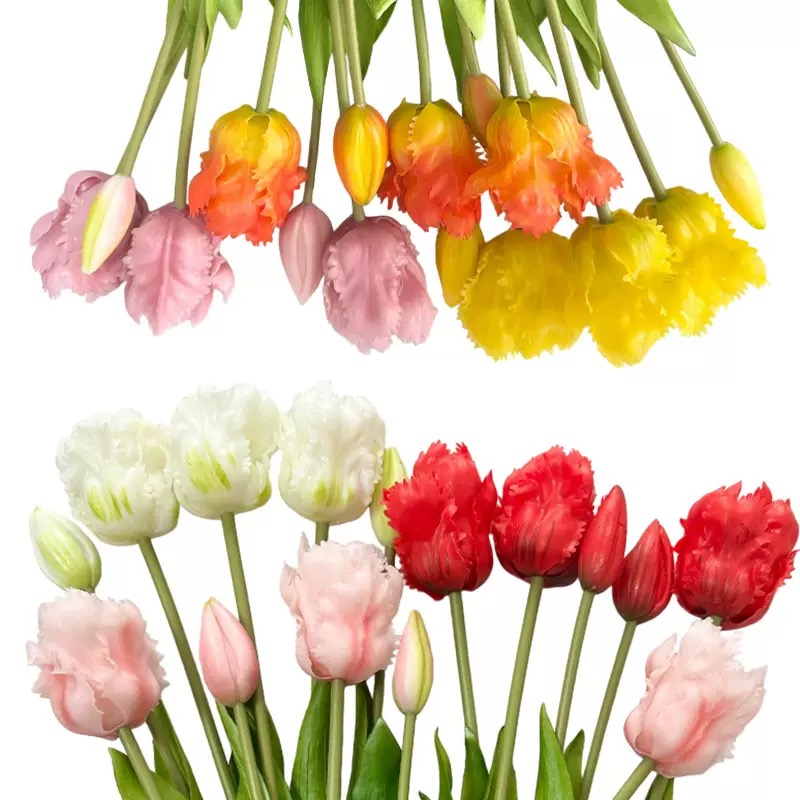
The most common materials used in artificial flowers include:
- PU (Polyurethane)
- Latex / Synthetic Rubber
- Silicone
- Polymer-Coated Synthetic Fabric
- Polyester
- PE (Polyethylene)
- PVC (Polyvinyl Chloride)
- Metal Wire & Other Structural Materials
Tip:
premium texture and close-up indoor display:PU
a fresh-flower-like soft and hydrated touch.:Latex
large-scale decoration with budget efficiency:Polyester Fabric / Silk Fabric
Real Touch VS Traditional Artificial Flowers
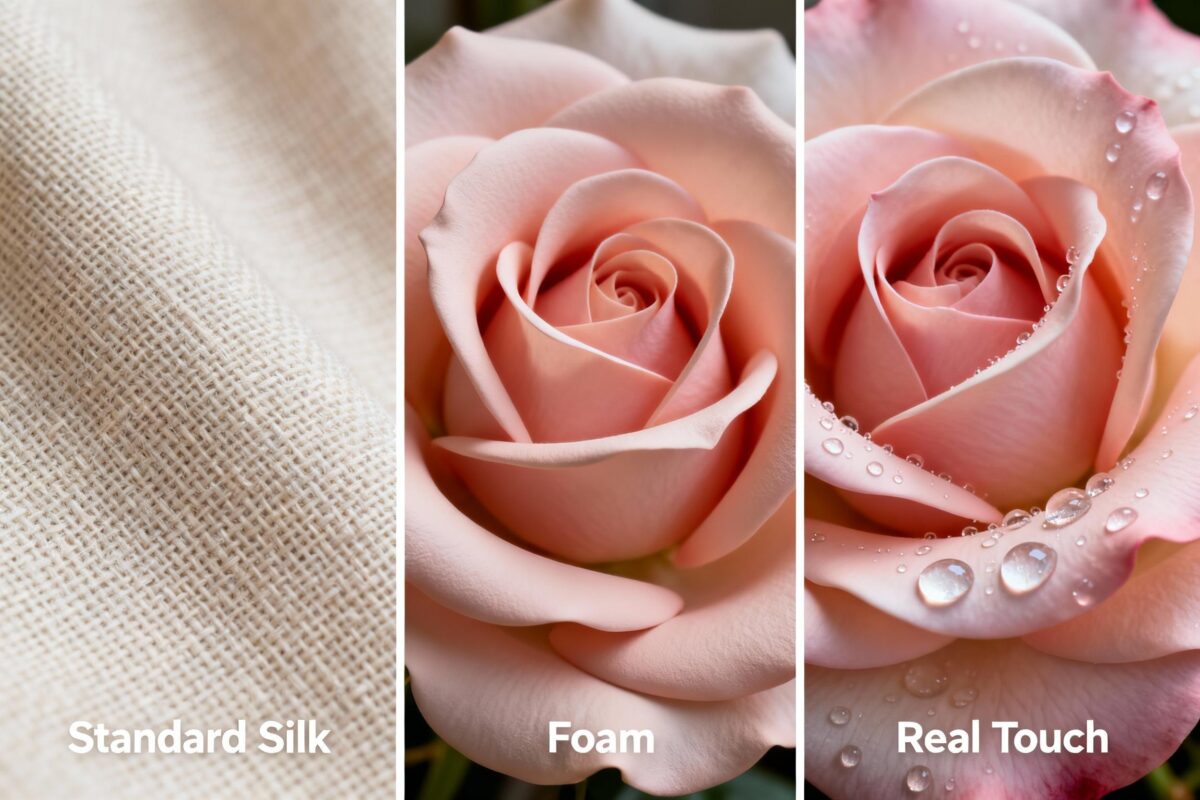
| Feature | Traditional Artificial Flowers | Real-Touch Flowers |
| Appearance&Touch | Basic flower shapes with limited details and a more artificial feel | Highly realistic details with natural colors, petal textures, and a soft touch similar to fresh flowers |
| Durability | Generally durable and suitable for long-term decoration | Durable with proper care, while offering a softer and more realistic texture |
| Maintenance | Gently wipe with a soft, slightly damp cloth. | Gently wipe with a soft, slightly damp cloth. |
| Price | Usually more affordable | Typically positioned at a higher price point due to materials and craftsmanship |
| Petal Texture | Simple textures with fewer details | Detailed veins, natural folds, and realistic petal structures |
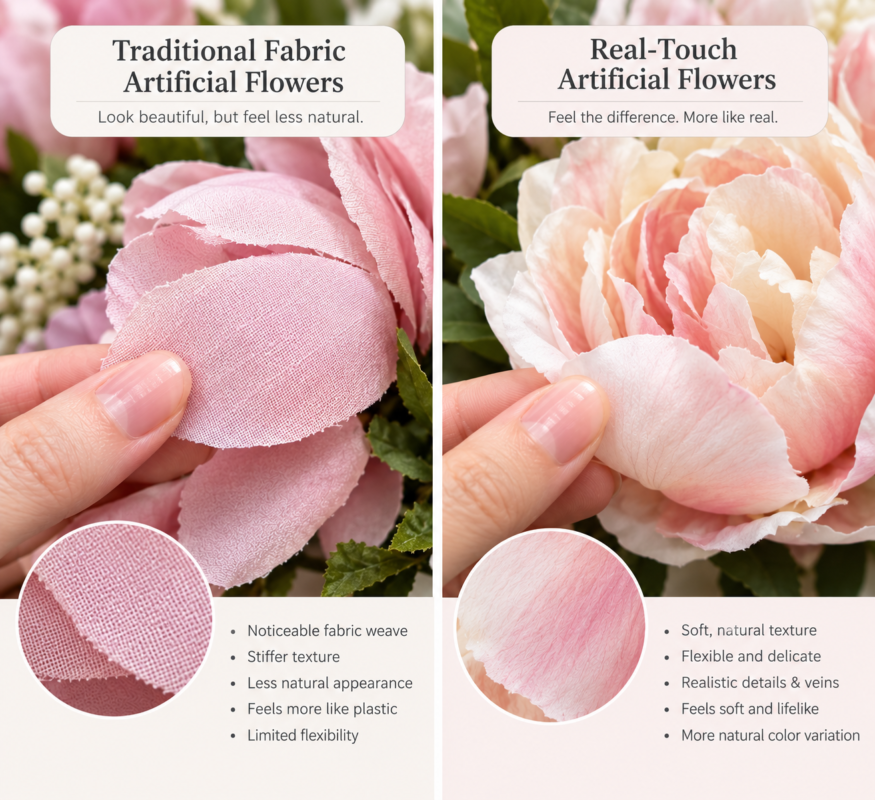
How to Identify High-Quality Real Touch Artificial Flowers
Not all artificial flowers are created equal. Some may look beautiful in photos, but the difference becomes clear when you touch the petals, examine the details, and look closely at the overall craftsmanship.
So, how can you tell if an artificial flower is truly high quality?
Here are the key details to look for.
1.Start with the Touch
Gently touch the petals and observe:
• Whether they feel soft
• Whether they have natural elasticity
• Whether they feature thickness similar to real petals
• Whether the surface is fine and smooth
• Whether there is an obvious plastic feel
High quality: Soft, fine‑textured and moderately elastic.
Low quality: Stiff, thin and brittle, or with a distinct plastic touch.
The core of Real Touch is not “the softer the better”, but whether the tactile sensation feels natural.
2.Look at the Petal Texture
Look for:
Natural petal texture
Subtle surface details
Soft and realistic edges
A natural, non-plastic finish
These details can make a significant difference in overall realism.
3.Check the Color and Shading
Look for:
• Natural color transitions
• Subtle shading around the flower center
• Slight variations along petal edges
• Soft, realistic tones
4. check Flower Shape
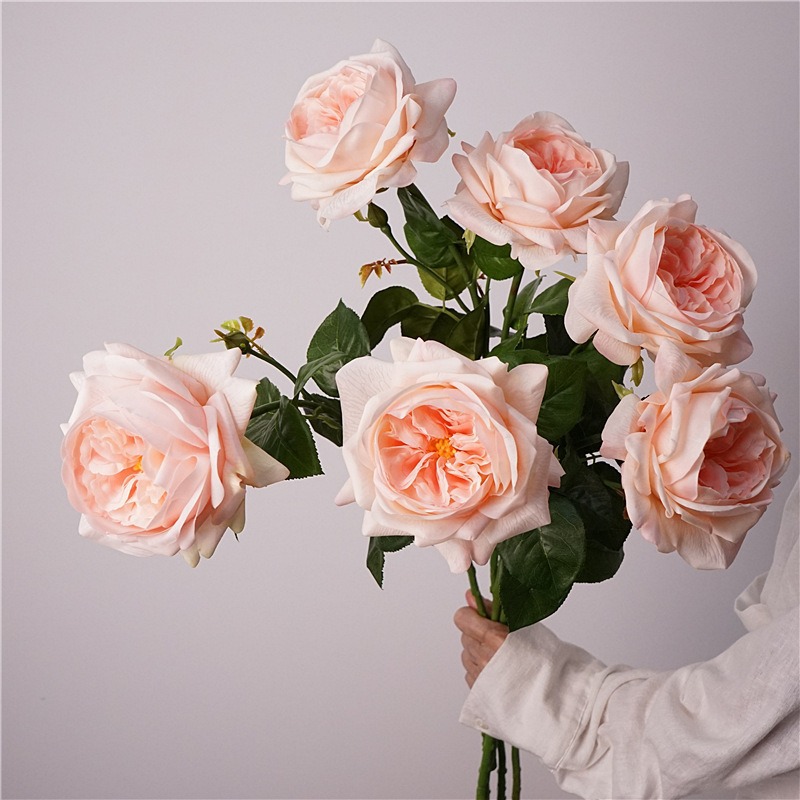
The petals should have natural curves and spacing rather than looking perfectly uniform. A well-made flower should have a full, balanced shape that resembles a real bloom.
5. Quality Leaves and Stems
Don’t forget to check the leaves and stems. High-quality artificial flowers should have realistic-looking leaves, flexible stems, and secure connections between each part.
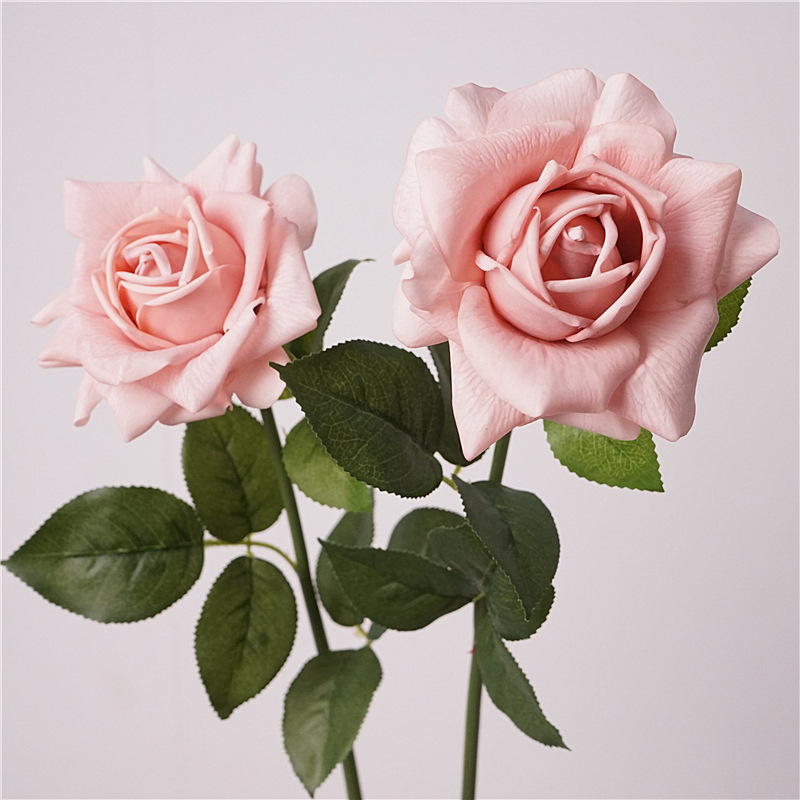
How to Clean & Maintain Real Touch Artificial Flowers
- Regularly remove dust from petals and stems using a feather duster or lint‑free microfiber cloth.
- For accumulated grime, lightly wipe surfaces with a barely damp, well‑wrung cloth.
- Keep arrangements out of intense direct sunlight to slow gradual colour fading.
- When not in seasonal use, store them in a cool, dry location and handle carefully to avoid petal creasing.
Looking for your ideal Real Touch flowers? Contact us for our catalog. We offer worldwide shipping and provide solutions for event planners and brands.